From Prototypes to Reusable Design Knowledge
Museum XR projects often face similar interaction problems, but solutions are still frequently designed from scratch.
I developed a two-level pattern system that captures recurring interaction problems, tested solutions, and the parameters needed to adapt them across different exhibits, spaces, technologies, and visitor situations.
The goal is simple: reuse what has already been learned.
The System
The system combines:
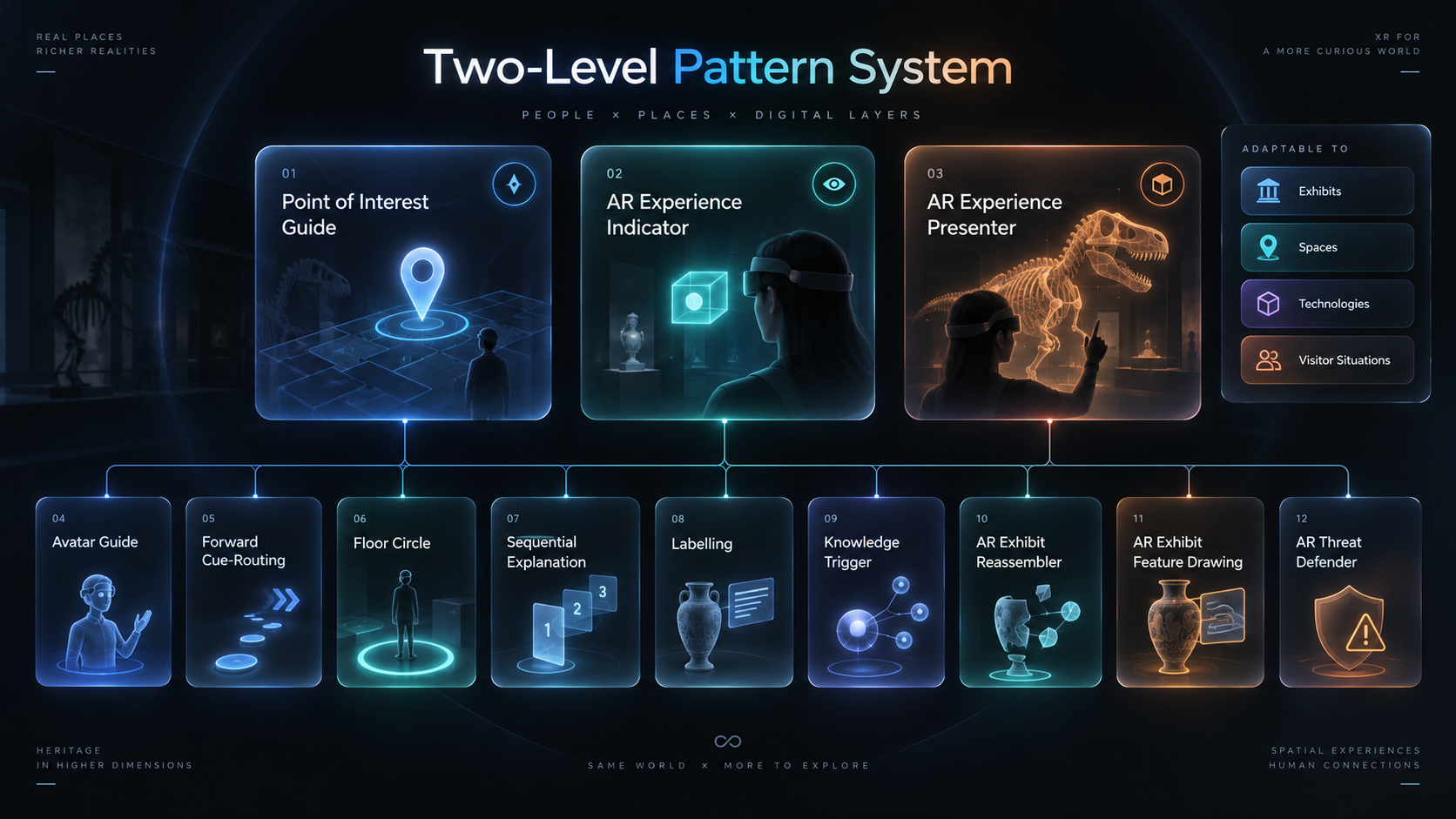
*AI-generated visualization created to support understanding of the pattern system. See the research page ↗ for the original research framework, pattern definitions, and supporting studies.
-
Application-Level Patterns — concrete interaction solutions that can be reused directly
-
Category-Level Patterns — higher-level structures for adapting and extending those solutions
Together, they turn individual XR prototypes into reusable design knowledge for museums and cultural heritage.
Example Compositions
The pattern system can also be combined into larger interaction flows for common museum situations.
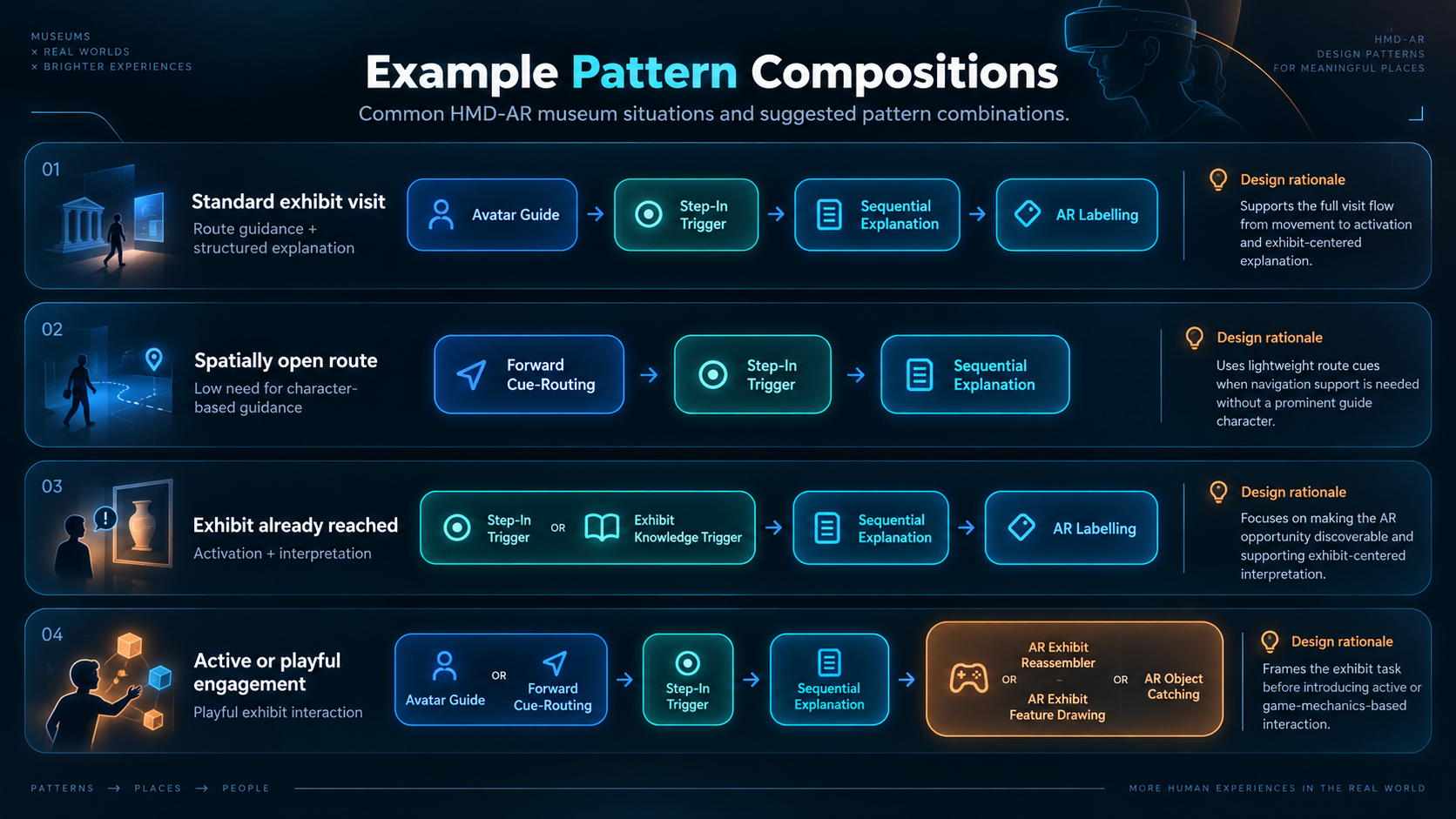
*AI-generated visualization created to support understanding of the pattern system. See the research page ↗ for the original research framework, pattern definitions, and supporting studies.
My Role
I translated field-tested XR interaction solutions into a reusable and parameterized design system.
Pattern Abstraction · Design System Development · Field Validation
Built from Real Projects
The system emerged from repeated prototype development, deployment, and evaluation across museum and cultural heritage projects in Germany and Portugal.
Explore the Research
The full research version includes individual patterns, relationships, parameters, publications, and supporting studies.